
Open Course › Course 1 › Module 3 · The soundscape archive
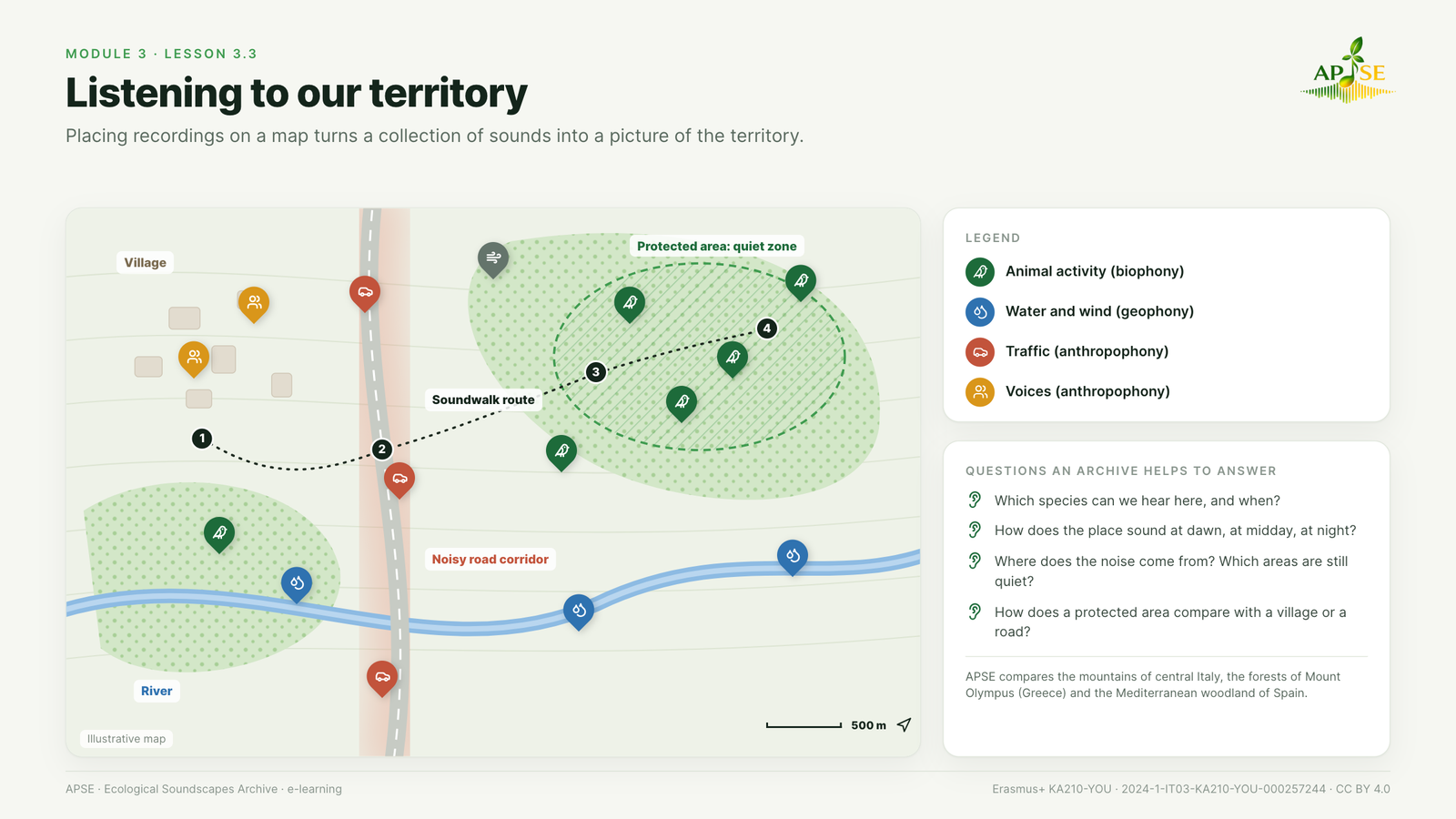
Figure 3.3. Listening to our territory. Placing recordings on a map shows hotspots of animal activity, noise and quiet areas.
Every place has its own sonic signature, made of its keynotes, its signals and its soundmarks. Building an archive starts with listening carefully to our own territory.
Questions an archive helps to answer:
- Which species can we hear here, and when?
- How does the place sound at dawn, at midday, at night?
- How does it change between spring and autumn?
- Where is the noise coming from and which areas are still quiet?
- How does a protected area sound compared with a nearby village or road?
Comparing places. The APSE partners work in very different environments, from the mountains of central Italy to the forests of Mount Olympus in Greece and the Mediterranean woodland of Spain. Comparing recordings from these areas shows how geography, climate and human presence shape soundscapes, and makes local differences audible to young people.
From listening to mapping. Placing recordings on a map turns a collection of sounds into a picture of the territory: hotspots of animal activity, noisy corridors, quiet areas worth protecting. The technical side of recording, cataloguing and mapping is explored in modules 5, 6 and 7.
Watch: How to Make a Sound Map (#GreenSpacesPresents) (Warwick District Council, YouTube). Third-party video embedded from YouTube; it is not covered by the course licence (CC BY 4.0).


Funded by the European Union. Views and opinions expressed are however those of the author(s) only and do not necessarily reflect those of the European Union or the Agenzia Italiana per la Gioventù. Neither the European Union nor the granting authority can be held responsible for them.
APSE · Erasmus+ KA210-YOU · 2024-1-IT03-KA210-YOU-000257244 · Licence CC BY 4.0 · Free and open: no registration needed.
