
Open Course › Course 1 › Module 4 · Soundscapes for healthy, sustainable environments
Module 4 · Soundscapes for healthy, sustainable environments
Thematic module 2: Importance of the Soundscape Archive
Module goals. By the end of this module you will be able to:
- explain the effects of noise and of natural sounds on human health and well-being;
- explain how noise affects animals and biodiversity;
- describe how soundscape data can help protect quiet areas and guide conservation.
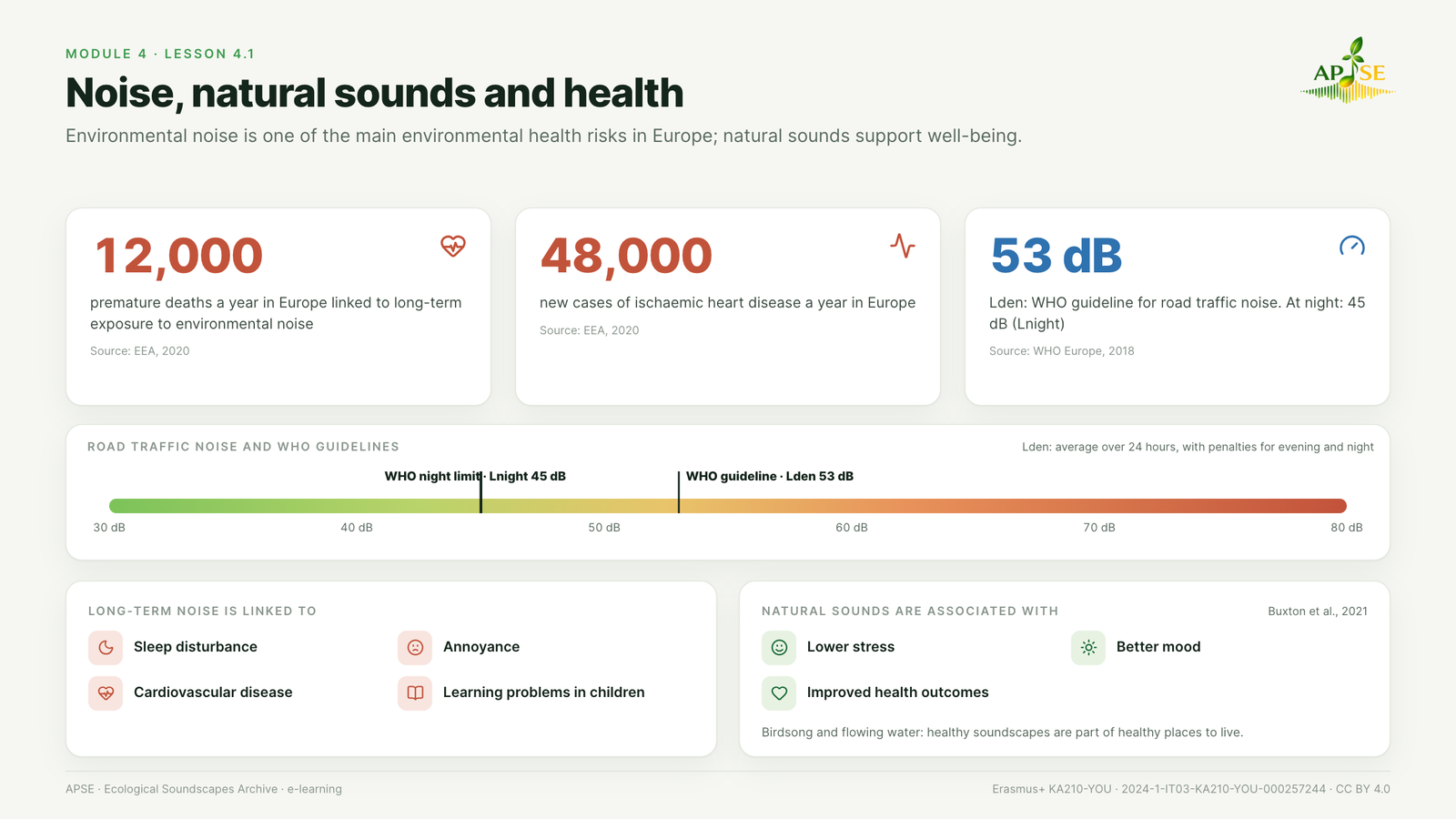
Figure 4.1. Noise, natural sounds and health. Key figures on environmental noise in Europe and the WHO guideline for road traffic noise.
Noise and human health. Environmental noise is one of the main environmental health risks in Europe. The European Environment Agency estimates that long-term exposure to environmental noise causes 12,000 premature deaths and contributes to 48,000 new cases of ischaemic heart disease every year in Europe (Environmental noise in Europe, 2020). The World Health Organization recommends keeping road traffic noise below 53 dB (Lden) to avoid harmful effects (Environmental Noise Guidelines for the European Region, 2018). Long-term exposure is linked to sleep disturbance, annoyance, cardiovascular disease and learning problems in children.
Natural sounds and well-being. Research shows that natural sounds such as birdsong and flowing water are associated with lower stress, better mood and improved health outcomes (Buxton et al., 2021). Healthy soundscapes are part of healthy places to live.
Try it with a group. Play one minute of traffic noise and one minute of a natural soundscape. Ask participants to describe how they feel after each one. Then discuss which places in their daily life sound like the first or the second recording.
Watch: Europeans are exposed to harmful noise pollution levels (European Environment Agency, YouTube). Third-party video embedded from YouTube; it is not covered by the course licence (CC BY 4.0).


Funded by the European Union. Views and opinions expressed are however those of the author(s) only and do not necessarily reflect those of the European Union or the Agenzia Italiana per la Gioventù. Neither the European Union nor the granting authority can be held responsible for them.
APSE · Erasmus+ KA210-YOU · 2024-1-IT03-KA210-YOU-000257244 · Licence CC BY 4.0 · Free and open: no registration needed.
