
Open Course › Course 1 › Module 4 · Soundscapes for healthy, sustainable environments
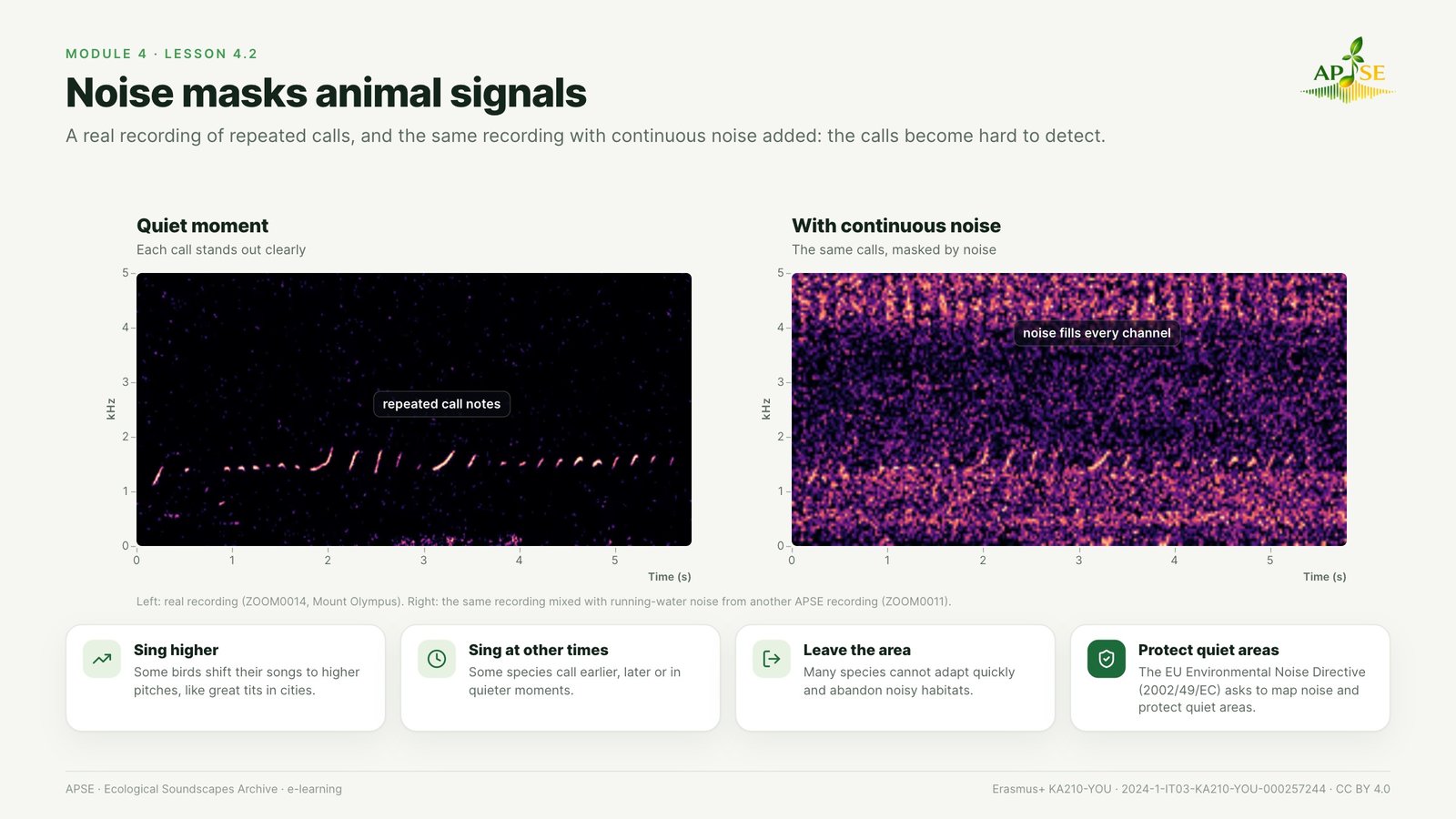
Figure 4.2. Noise masks animal signals. A real recording of repeated calls, and the same calls with continuous noise added.
Noise and biodiversity. Noise masks the signals that animals use to find a partner, defend territory, keep the group together and detect predators. Some species adapt by changing the pitch or timing of their calls; many cannot adapt quickly and leave noisy areas.
Protecting soundscapes. The EU Environmental Noise Directive (2002/49/EC) asks Member States to map noise and to protect “quiet areas”. Soundscape data can guide where to place trails, quiet zones and restoration actions, and can show whether conservation measures are working as biophony returns over time.
The role of youth workers. By helping young people listen, record and compare soundscapes, youth workers make the link between sound, health and biodiversity tangible, and encourage young citizens to take part in protecting their environment.
Watch: How Does Noise Pollution Affect Wildlife? (Northern California Public Media, YouTube). Third-party video embedded from YouTube; it is not covered by the course licence (CC BY 4.0).


Funded by the European Union. Views and opinions expressed are however those of the author(s) only and do not necessarily reflect those of the European Union or the Agenzia Italiana per la Gioventù. Neither the European Union nor the granting authority can be held responsible for them.
APSE · Erasmus+ KA210-YOU · 2024-1-IT03-KA210-YOU-000257244 · Licence CC BY 4.0 · Free and open: no registration needed.
