
Open Course › Course 2 › Module 7 · Building the APSE soundscape archive
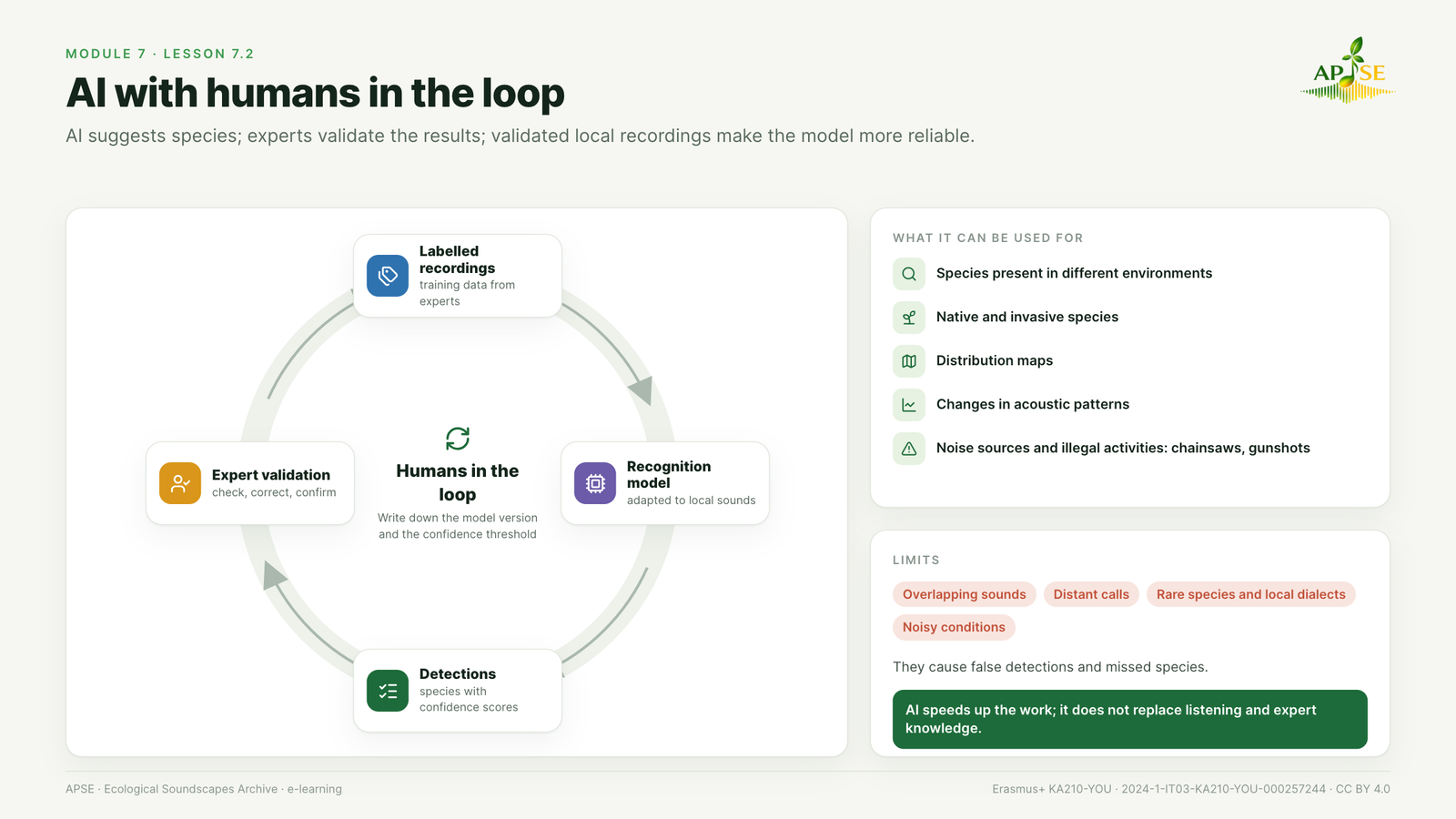
Figure 7.2. AI with humans in the loop. A recognition model suggests species; experts validate and the model improves.
How it works. A recognition model is trained on many recordings labelled by experts. It learns the patterns that each species draws in a spectrogram and, when it receives a new recording, it suggests which species are present, with a confidence score.
Adapting the model to local conditions. A model works best when it is trained or adapted with recordings from the same area, species and noise conditions. Validated local recordings make it more reliable over time.
What it can be used for.
- identifying the species present in different environments through their calls;
- distinguishing native from invasive species;
- mapping the distribution of species;
- following changes in acoustic patterns, for example when human disturbance changes animal behaviour;
- detecting noise sources and illegal activities such as illegal logging (chainsaws) and poaching (gunshots).
Humans in the loop. Experts check a sample of the results, correct the errors and validate unusual records. Write down the model version and the confidence threshold used, so that results can be compared over time.
Limits. Overlapping sounds, distant calls, rare species, local dialects of birdsong and noisy conditions all cause errors: false detections and missed species. AI speeds up the work; it does not replace listening and expert knowledge.
Watch: Topher White: What can save the rainforest? Your used cell phone (TED, YouTube). Third-party video embedded from YouTube; it is not covered by the course licence (CC BY 4.0).


Funded by the European Union. Views and opinions expressed are however those of the author(s) only and do not necessarily reflect those of the European Union or the Agenzia Italiana per la Gioventù. Neither the European Union nor the granting authority can be held responsible for them.
APSE · Erasmus+ KA210-YOU · 2024-1-IT03-KA210-YOU-000257244 · Licence CC BY 4.0 · Free and open: no registration needed.
